Is Blinkist Worth It? Who Book Summaries Help and Who They Shortchange
When a 15-minute summary genuinely saves time, when it quietly replaces the reading you meant to do, and a two-week usage test you can run on the free plan before paying for Blinkist Premium.
Some links in this article lead to partner services. If you make a purchase there, the site may receive a commission; this does not affect the price or our assessment.
Blinkist compresses non-fiction books into summaries you can read or listen to in about a quarter of an hour. Whether that is worth a yearly subscription depends on what you would otherwise have done with the same books: read them properly, skimmed them, or never opened them. Here is how I would judge it, with a test you can run for free before deciding.
What you actually get
At the time of checking, Blinkist describes its summaries, called Blinks, as explainers that condense a non-fiction book's most important insights into key ideas of roughly 200 to 300 words each, taking around 15 minutes to read or listen to. The plans break down like this:
Basic (free): one hand-picked title a day, also available on the web as the free Daily Pick.
Premium (billed yearly): the full library of 9,000 plus summaries across 27 categories, audio versions, offline listening, Guides, Shorts, Kindle sending, recommendations and the option to share the plan with one other person.
Pro and Platinum: Premium plus additional features such as a summarising assistant, live sessions and infographics.
A seven-day free trial covers Premium. Prices vary by country and promotion, so check the current figure on Blinkist's site rather than trusting a number from a review.
Where a summary genuinely helps
Summaries are good at three jobs, and honest about none of them in the marketing.
Triage. Most popular non-fiction has one idea and 250 pages of examples. Fifteen minutes tells you whether the idea is new to you and whether the full book deserves your evening. Used this way, Blinkist is a filter, and a filter that stops you buying three mediocre books a year has paid for itself.
Refresh. For a book you read years ago, a summary restores the structure before a meeting, a course or a conversation. This is the use case closest to a genuine time saving with nothing lost, because the depth was already acquired.
Dead time. Audio summaries fit a commute or a queue where a full audiobook would be abandoned midway. If the alternative is a social feed, a summary is a better default.
Where a summary shortchanges you
The flip side is just as concrete.
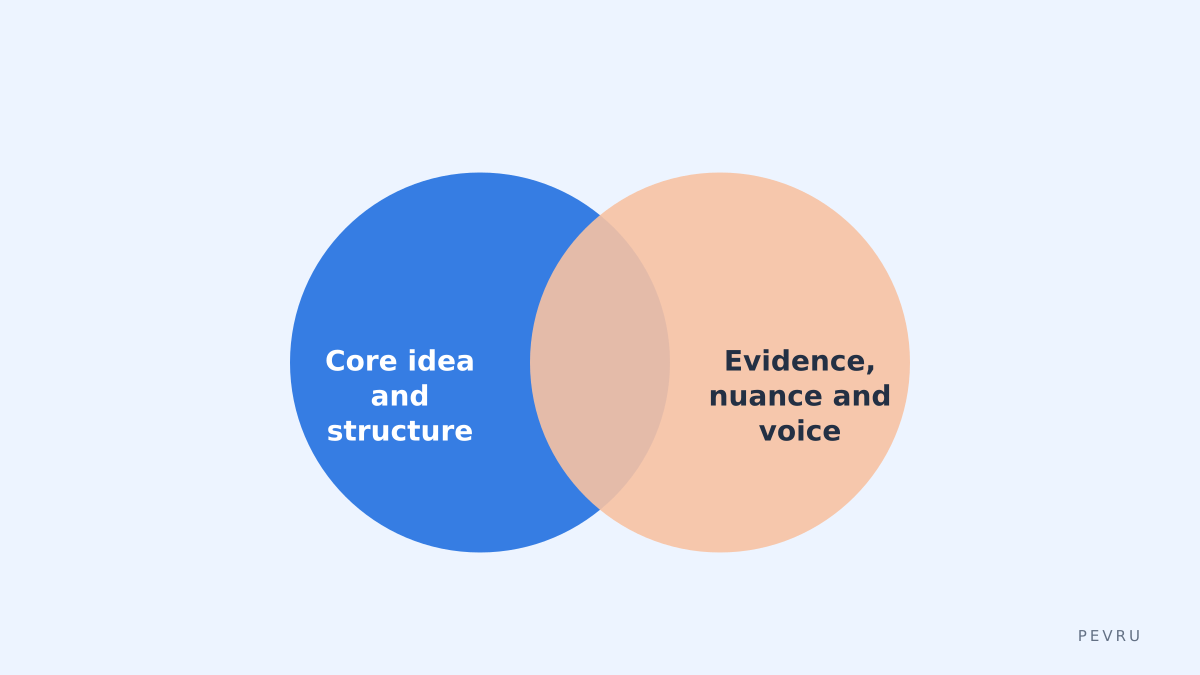
Books built on argument. Summaries flatten the reasoning into conclusions. For history, economics, science and anything with a contested thesis, the interesting part is how the author gets there and what they concede along the way. A key-ideas list of a careful book reads like a confident book, which is the opposite of what you needed.
Skills. You cannot learn to write, negotiate or program from a summary; the value of those books is the worked examples and the exercises. The Blink tells you that the exercises exist.
Memory. Reading a full book takes days, and that slowness is part of why it sticks. Summaries are efficient to consume and efficient to forget. If you cannot recall the point of a summary you finished last week, the time was not saved; it was spent differently.
Substitution. The quiet risk is that a summary feels like reading. Ten Blinks a week produces a sense of progress that can replace the one real book you meant to finish. Blinkist is not to blame for that, but the subscription rewards it.
A two-week test before you pay
Run this on the free plan and the trial. It answers the question with your own behaviour rather than with a review.
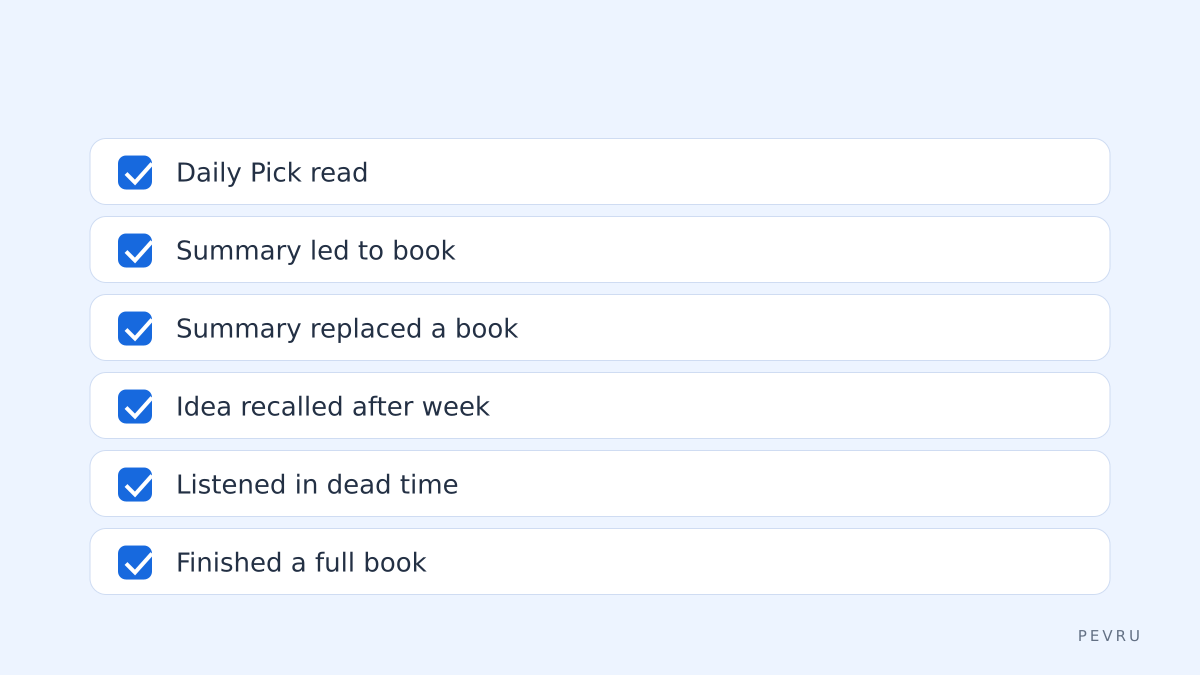
Week one, free plan only. Read or listen to the Daily Pick every day. On day seven, write down from memory what each of the seven was about. Count how many you can recall in one sentence.
Week two, Premium trial. Pick summaries deliberately: three books you own and have not opened, two you read years ago, two you were about to buy.
Score it. Count the summaries that led you to open or buy a book (triage working), the ones you used to refresh, and the ones that replaced a book you had intended to read.
Then read your results against this table:
Your pattern after two weeks | Verdict | What to do |
|---|---|---|
Recall high, several summaries led to books | Worth it as a filter | Keep Premium; use it to choose reading, not to replace it |
Mostly refreshes of books you already know | Worth it, lightly | Consider whether the free Daily Pick plus a library card covers you |
Mostly listened in dead time, low recall | Marginal | Try a single audiobook in the same slots for two weeks and compare |
Summaries replaced books you meant to read | Not worth it for you | Cancel; the subscription is feeding the habit you wanted to break |
Barely opened the app after day four | Not worth it | Cancel before the trial converts |
If you land in the first two rows, the Premium plan is defensible; the shared-account option also makes the yearly price easier to justify for a couple or two colleagues.
Limitations and alternatives
A few things the sales page underplays. The catalogue is non-fiction only, and it leans toward business, self-improvement and popular psychology; academic and literary non-fiction is thinner. Summaries are written by Blinkist's team, so the author's voice and the book's evidence are gone by design. The billing is yearly, which is good value if you keep using it and a full-price regret if you stop in February. And the free plan gives one title a day chosen for you, not one of your choosing.
If a different trade-off suits you, alternatives exist without a link here: your public library's app often lends full audiobooks free, and a general audiobook subscription delivers whole books at the cost of a much lower titles-per-month count. Publisher-supplied abstracts and long-form reviews also cover the triage job for nothing.
Conclusion
Blinkist is worth it for people who use summaries to decide what to read and to refresh what they have already read, and it is a poor deal for people who use it instead of reading. The two-week test above will tell you which you are, and it costs nothing beyond the trial. If your results show summaries feeding real books rather than replacing them, subscribe to Blinkist Premium with a cancellation reminder set for eleven months out; if they show the opposite, the honest saving is not the subscription but the hour a week you give back to a book.