Blinkist review – 3 quick checks before you subscribe
Blinkist is useful for fast overviews if you need 15-minute summaries and audio plus text. Read the table, quick checklist, traps and a decision rule for self-directed learners.

Some links in this article lead to partner services. If you make a purchase there, the site may receive a commission; this does not affect the price or our assessment.
Yes. Blinkist works when your goal is fast conceptual coverage and idea capture rather than deep mastery; its summaries are designed as 15-minute readable or listenable "blinks" and pair audio with text for most titles. The service groups content into short blinks and thematic "collections", and that format is the key tradeoff you accept up front. Below you get a short table comparing options, three concrete checks to make before you pay, a step-by-step how-to for a trial, and honest caveats.
In short – three essentials
Quick fit – Use Blinkist when you want 15-minute idea maps and audio plus text for dozens of nonfiction topics.
Depth limit – Expect summaries to skip chapter-level nuance; plan follow-up reading for application and citations.
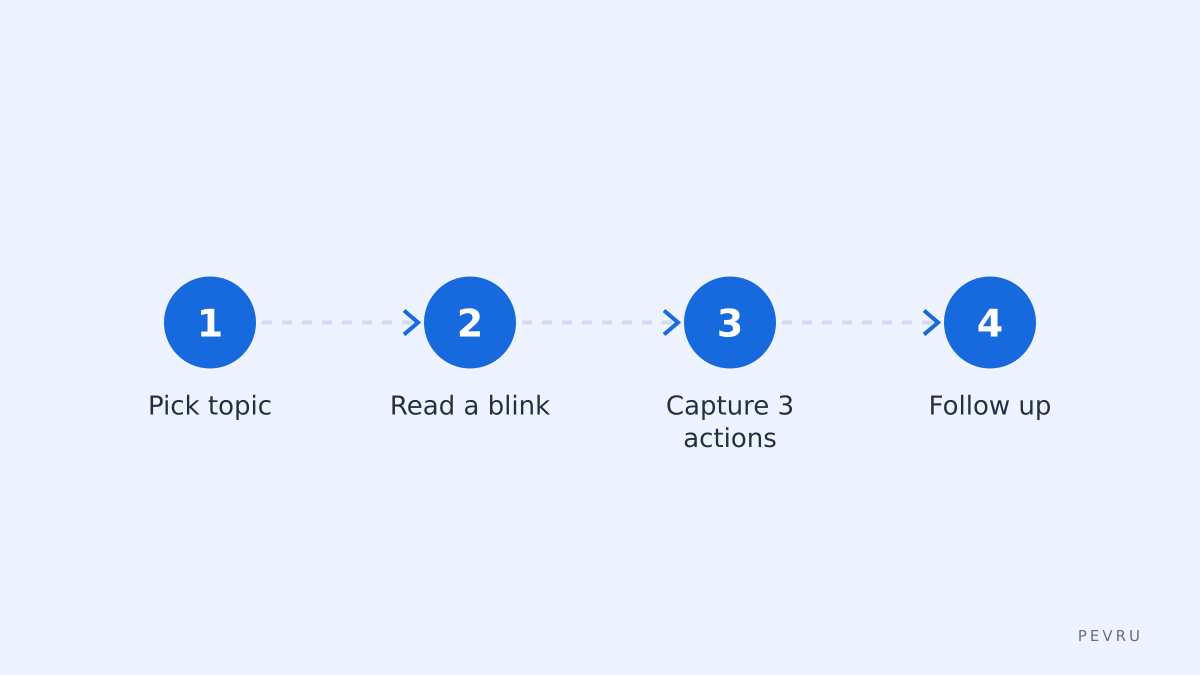
Try it right – Start with a free trial or single-month plan and test one topic end-to-end (read a blink, listen to audio, capture 3 action points).
How does Blinkist compare to reading a full book or other summary services?
Most users choose Blinkist for speed and convenience; the comparison below focuses on who wins the time–depth tradeoff, a concrete time unit, and the main drawback.
option | who it suits | key number | main drawback |
|---|---|---|---|
Blinkist (short summaries, audio + text) | Busy learners who need quick idea maps | ~15 minutes per "blink" | Omits in-depth examples and full citations |
Full book reading | Deep learners applying concepts | Hours to days per book | High time cost for initial survey |
Alternative summary services (paywalled research summaries) | Professionals needing source-level detail | Varies; often longer than 15m | Can be expensive and topic-limited |
One honest limitation of Blinkist is limited depth; one alternative is reading the full book or using academic summaries when you need sources or methods.
Will Blinkist save me study time without hurting learning?
Yes, when you pair it with active recall and focused follow-up. Read or listen to a blink, then immediately write three specific action items or questions that apply to your project. If your goal is literature review, capture the book title and two primary claims and then add one source you must check in the original. Use Blinkist as a tradeoff tool: it reduces initial scanning time to roughly 15 minutes per book-equivalent idea, but it does not replace the depth of annotations, methods, or primary sources. For skills you will teach or apply directly, schedule one full book read for every four or five blinks you find valuable.
Which topics and features are worth the subscription?
Look for summaries in topic areas where breadth matters more than original data – leadership, productivity, career strategy, frameworks, and psychology. Blinkist pairs audio with short text, so it helps commuting or quick review. Check the catalogue pages on the site to confirm coverage in your niche before subscribing. If you need case studies, technical formulas, or code examples, those are often absent. Use the Blinkist collections to sample clusters of titles in one theme; that reveals whether the service covers your priority authors and subtopics.
How to trial Blinkist without wasting money
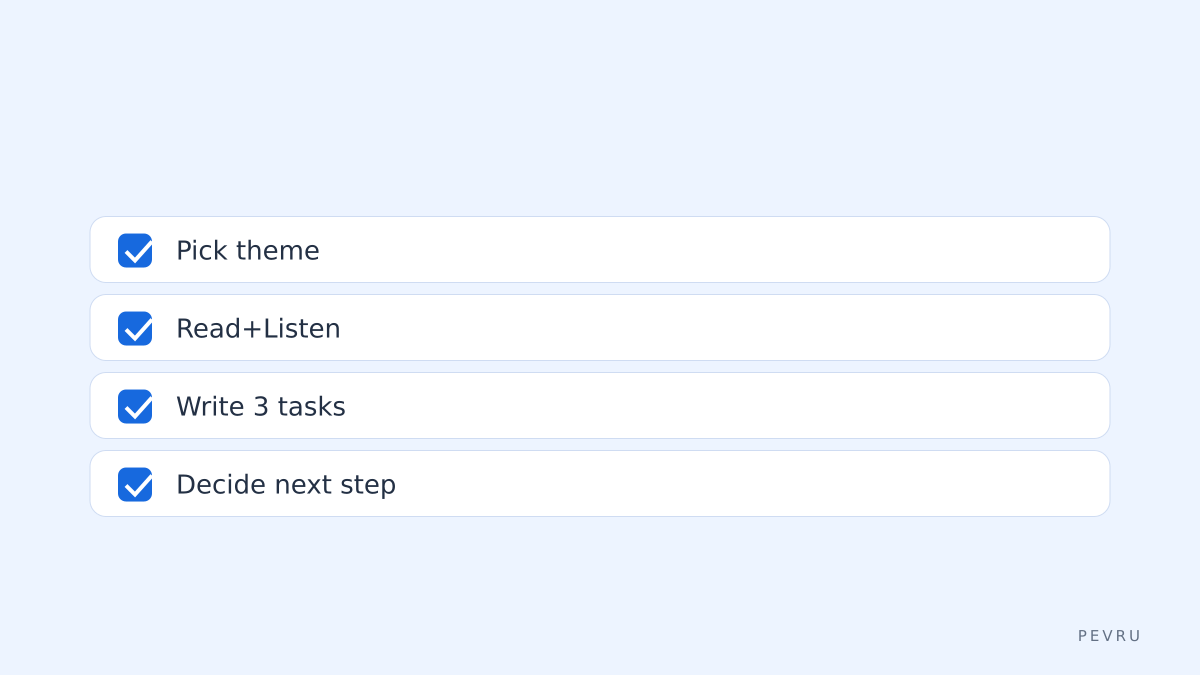
Pick one theme you care about that you can apply in a week, for example "decision-making".
Open a free trial or a single-month plan and commit to three steps: read one blink, listen to it on a commute, then write three application tasks in a note.
After seven to ten days, evaluate whether those tasks would have required deeper reading; if yes, follow up by reading the full book for the highest-value blink. This routine reveals whether Blinkist produces actionable insight or only high-level summaries in your context. Link to Blinkist when you sign up and choose an initial theme.
Common traps and how to avoid them
Trap 1 – Treating summaries as citations: never cite a blink as the original source. Always check the original book for evidence, methodology and quotes. Trap 2 – Skipping application: if you do not force one experiment or note after each blink, retention drops fast. Set a calendar reminder to apply one idea within 48 hours. Trap 3 – Over-relying on breadth: a library of many blinks can create false confidence. For decisions with stakes, reserve full reads or primary sources.
FAQ about blinkist review
Q: Is Blinkist good for deep learning? A: No, it is not built for deep learning; it provides concise overviews and idea mapping that need follow-up reading for depth. Use Blinkist to triage books, then read the original when methods or data matter.
Q: Can I listen to Blinkist offline? A: Yes, audio summaries are downloadable inside the app for offline listening, which helps commuting or short focused review sessions. Confirm offline availability for specific titles in the app.
Q: Will Blinkist replace book clubs or classes? A: No, Blinkist cannot replicate discussion dynamics or guided practice; it supplements those formats by preparing you with the main ideas before group sessions.
Q: Is the content biased or selective? A: Summaries simplify and emphasize main claims; expect selection bias toward headline takeaways and practical recommendations rather than balanced critique.
Q: How often does the library update? A: The service adds new summaries and collections regularly; check the Blinkist catalogue pages to verify current coverage for your topics.
Decision rule – when to buy: if you need fast surveys across many topics and you will run at least one concrete application experiment per five blinks, subscribe to Blinkist; if you need citations, methods, or code, plan a full-book read instead.
Sources
https://www.blinkist.com
https://www.blinkist.com/magazine/
https://www.blinkist.com/help/